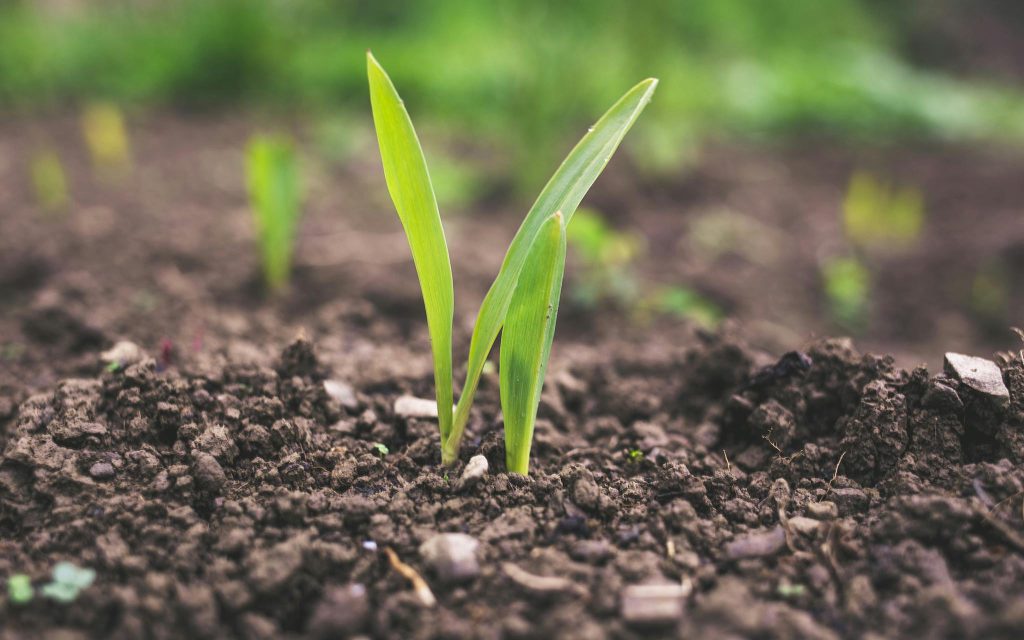
Show #156 - Fall Lawn Rehab: Build Better Soil for a Healthier Lawn
Fall lawn renovation isn’t simply about spreading grass seed. According to Great Gardens Radio, successful lawn rehabilitation starts with the soil and continues with the right combination of aeration, topdressing, lime, seed, fertilizer, and water.
Show #156 walks through the process step by step while explaining why many traditional lawn-care practices—including straw, K-31 seed, dethatching, and low-grade starter fertilizer—are outdated.
The goal isn’t to grow more grass plants. It’s to create an environment where the grass plants you already have can grow larger, deeper, and healthier.
Step 1: Mow the Lawn Low
Begin lawn rehabilitation by mowing the existing lawn down to approximately 1 inch, or as low as your mower will allow.
Lowering the grass makes the subsequent renovation steps easier and prepares the lawn for core aeration and topdressing.
Step 2: Core Aerate With Three Passes
The episode recommends three passes of core aeration, not one.
Three-pass aeration is presented as a more effective approach that can allow homeowners to aerate every other year rather than automatically doing it every year.
After aerating, you’re ready to address the soil itself.
Step 3: Topdress With Quality Soil
One of the biggest decisions in lawn rehabilitation is determining whether you need to:
- Repair specific damaged areas
- Topdress the entire lawn
- Or combine both approaches
The episode estimates that one cubic yard of soil covers nearly 1,000 square feet at approximately ⅓ inch deep.
For spot repair or complete renovation, take the time to rake the soil perfectly level. A smooth, properly graded surface becomes especially important when using a large riding mower compared with a smaller 22-inch mower.
McGill’s Soil Builder
The episode repeatedly emphasizes soil improvement because the lawn’s long-term success depends on the environment surrounding the roots.
Rather than automatically adding more grass seed, improve the soil first.
Step 4: Apply Lime
The recommended lime application is 40 pounds per 1,000 square feet.
The episode advises opening the spreader widely and removing the agitator pin for the application.
Lime is considered an essential part of the lawn rehabilitation process because it helps improve the environment in which fertilizer and water are stored and made available to growing grass.
Step 5: Choose the Correct Seed for Sun or Shade
Grass seed selection should be based on how much sunlight the area receives—not simply what seed is most readily available.
For the six-hour period between 11 a.m. and 5 p.m., the episode breaks sunlight exposure into several categories:
- Sunny/light shade: At least 3 hours of full sun
- Medium shade: 2–3 hours of full sun
- Dense shade: 1–2 hours of full sun
- Complete shade: Less than 1 hour of full sun
Tall fescue is recommended for sunny areas with sufficient light.
If an area receives less than an hour of direct sun during the 11-to-5 period, growing lawn there becomes difficult.
Sometimes the Best Lawn Is a Smaller Lawn
In complete shade, the episode recommends considering a larger mulch bed and a smaller lawn.
You can also limb up trees to allow more sunlight into the lawn.
Where grass simply cannot thrive, consider using shade-loving ground covers and other plants designed for complete shade.
Step 6: Fertilize When You Seed
The episode recommends fertilizing whenever you seed, using quality slow-release fertilizer such as Turf Trust.
The emphasis is on fertilizers with:
- Low salt levels
- Long-lasting slow-release nutrition
- Sulphate of potash
- Iron
The show specifically advises against outdated seed-and-sod starter fertilizers.
The philosophy is straightforward: new seed needs nutrition, but quality nutrition matters.
Step 7: Water New Seed After 5 P.M.
Watering is one of the most important parts of lawn rehabilitation.
The episode recommends watering after 5 p.m., taking advantage of shade and nighttime conditions to extend moisture availability.
For new lawn areas, water every evening after 5 p.m. for 2–3 consecutive weeks.
Once the new grass reaches approximately 5 inches, mow it down to 3 inches.
After you’ve mowed the new lawn twice, it is considered established.
Step 8: Concentrate on Spot Repair
Most quality lawns don’t need complete overseeding every year.
Instead, focus your soil and seed work on weak areas.
This approach can significantly reduce the amount of watering and seed required while concentrating resources where they’re actually needed.
Greenview Grass Seed Accelerator
The episode recommends covering spot repairs with approximately ½ coverage of Greenview Grass Seed Accelerator.
The product is described as a modern replacement for straw that contains a Jello-like water expander designed to hold and attract moisture around the repair area.
Unlike straw, it decomposes into the soil and doesn’t need to be removed.
Step 9: Add Kick-Start
After the first watering, the episode recommends applying liquid Kick-Start to repaired areas.
This humate is described as penetrating the seed cover and helping seeds germinate approximately twice as fast.
The result is a faster start for the repaired lawn.
Step 10: Don’t Overseed Your Repair Areas
One of the most important lessons from the episode is that more seed isn’t necessarily better.
Every seed has the potential to grow into a larger plant.
If you use too much seed—or don’t provide enough soil—the same weak areas may continue to fail year after year.
The episode’s memorable conclusion is:
“We have a lot of environment and not a lot of seed.”
The objective is to create a superior environment rather than simply increasing the number of grass seeds.
What NOT to Do During Modern Lawn Rehab
Show #156 also provides a list of traditional lawn-care practices that homeowners should reconsider.
Don’t Use Straw
Straw was widely used decades ago because Kentucky bluegrass could take more than 30 days to germinate.
Modern tall fescue germinates much faster, making straw unnecessary for today’s lawn renovation approach.
The episode recommends Greenview Grass Seed Accelerator instead.
Don’t Use 10-10-10 or Low-Grade Starter Fertilizer
The episode rejects fast-release, low-grade fertilizers and traditional seed-and-sod starter products in favor of low-salt, slow-release nitrogen fertilizers.
Don’t Use K-31
The show specifically advises against K-31 grass seed, emphasizing the improvements made in modern tall fescue varieties.
Don’t Dethatch a Tall Fescue Lawn
The episode explains that modern tall fescue produces very little thatch.
The material that people often mistake for thatch is actually grass clippings and organic material that will eventually decompose into soil.
The episode describes traditional dethatching as a practice that has evolved into core aeration, topdressing, or a combination of both.
Lawn Care Has Changed Since 1960
One of the episode’s major themes is how dramatically lawn care has evolved.
Today’s homeowners have access to products and practices that weren’t available 65 years ago, including:
- Modern tall fescue varieties
- Specialized shade seed blends
- Greenview Grass Seed Accelerator
- Wilt-Pruf
- Image All-in-One
- Low-salt slow-release fertilizers
- Humates such as Kick-Start
- Modern soil-building products
For sunny lawns, the episode recommends modern generations of tall fescue rather than the Kentucky bluegrass approach of the past.
For shade, it recommends blends incorporating chewings and hard fine fescues.
The message is clear: modern lawn care should use modern tools.
It All Comes Back to the Dirt
The episode’s central philosophy can be summed up in three words:
It’s the dirt.
Soil acts like a refrigerator or freezer for the lawn, storing food and water until the grass needs them.
The better the soil, the larger that “freezer” becomes—and the easier long-term lawn care becomes.
Soil Doesn’t Come Preloaded With Food
The episode makes an important analogy: when you buy a refrigerator, it doesn’t come filled with food.
Likewise, soil should not be assumed to contain everything a lawn needs.
In sunny areas, one or two topdressing applications may be enough because microbial activity can gradually build soil volume.
In heavier shade, more frequent soil building may be necessary.
Look at the Top Inch of Soil
The episode recommends plugging the lawn and examining the top 1 inch of soil, where approximately 80% of lawn chemistry takes place.
Pay particular attention to developing rich, black soil.
The philosophy is summed up with another memorable gardening comparison:
“You don’t grow your vegetables, you grow the dirt, and the dirt grows the vegetables and the lawn.”
A superior environment allows plants to make better use of water, lime, and fertilizer.
Perfect Plants: Color Beyond Flowers
Show #156 also shifts from lawn rehabilitation to some of the landscape plants that can provide exceptional color and performance.
The episode encourages gardeners to look beyond flowers and consider color by foliage.
Dicondra Silver Falls and Creeping Jenny
Dicondra Silver Falls is highlighted for its silver-blue foliage and low, spreading habit. A 4-inch plant can spread approximately 2½ feet in every direction, although it is an annual.
Its perennial counterpart, Golden Moneywort or Creeping Jenny, offers a similar spreading habit with bright yellow foliage.
Both prefer sun.
Lamium Purple Dragon
For shady areas, Lamium Purple Dragon provides silver-and-white foliage with green accents, pink highlights, and blue flowers.
Sarcococca
For an evergreen shade groundcover, Sarcococca grows approximately 6–8 inches and is valued for its fragrance.
Patriot Hosta
Patriot Hosta offers intense white variegation throughout the season and can tolerate approximately half a day of full sun.
The episode notes that its thick foliage is also less appealing to slugs.
Evergreen Plants for Year-Round Color
The episode also highlights several evergreens where foliage provides the primary attraction.
RH Montgomery bush-form Blue Spruce offers consistent steel-blue foliage.
Nana Lutea Chamaecyparis provides intense yellow foliage in a compact evergreen form.
Winter Sun Mahonia combines deep blue-green foliage with large yellow flower clusters from November through Christmas. A smaller version, Marvel Mahonia, reaches only about 3½–4 feet and produces striking yellow flowers during the darker months.
Repeat-Blooming Azaleas Change the Color Game
Modern repeat-blooming azaleas have transformed the landscape color calendar.
The episode highlights:
- Bloom-a-thon Double Pink
- Bloom-a-thon Pink
- Bloom-a-thon White
- Bloom-a-thon Deep Red
- Bloom-a-thon Purple Spectacular
- Encore Autumn Bonfire
- Encore Autumn Majesty
- Encore Autumn Kiss
The newest standout mentioned is Autumn Kiss, with deep pink flowers surrounding a darker double center.
The episode also previews Autumn Velvet, described as a chocolate-red Encore Azalea arriving in spring 2027.
Andromeda and Katsura for Shade
For an evergreen shrub in the shade, the episode recommends Andromeda, also known as Lily-of-the-Valley shrub.
Katsura is highlighted for its rich green foliage and dramatic burgundy-red new growth after blooming.
The pink-blooming Glowing Hearts is another shade-loving selection highlighted as a standout.
Japanese Maples: Exceptional Fall Color
Few plants can compete with Japanese Maples for foliage color.
The episode highlights:
- Red Dragon for deep, long-lasting red laceleaf foliage
- Trombley’s Red Sensation, also called Trombley’s Red Sentinel, for compact upright growth and intense red color
Betty’s carries more than 60 varieties of Japanese Maples, each offering distinctive landscape color.
The episode describes Japanese Maples as understory trees that help dominate the late-fall color season.
Small Trees With Big Landscape Impact
Other lesser-known landscape trees highlighted include:
- Styrax japonica, or Japanese Snowball Tree, with fragrant white blooms
- Marley’s Pink
- Weeping Pink Chimes
- Carillon
- Multiple improved Redbud varieties
The episode names Redbud selections including Flame Thrower, Rising Sun, Golden Falls, Black Pearl, Rise and Shine, Heart’s A Fire, and Ruby Falls.
Endless Summer Hydrangeas and Repeat Blooming
The Endless Summer Hydrangea collection has expanded dramatically, with the episode noting approximately 40 varieties.
Summer Crush, a compact raspberry-colored selection, is highlighted as a favorite.
But even exceptional repeat-blooming plants need the right environment and nutrition.
The episode emphasizes that continuous blooming requires continuous slow-release nitrogen, highlighting Plant Trust, Fertilome Start-n-Grow, and Agriform.
The Big Lesson: Build the Environment
Whether you’re renovating a lawn or growing a landscape full of repeat-blooming plants, Show #156 returns to the same fundamental principle:
Superior plants need a superior environment.
For lawns, that means quality soil, proper aeration, the correct seed for sun or shade, adequate water, lime, and slow-release fertilizer.
For gardens, it means selecting plants for the right environment and supporting them with proper nutrition and care.
Modern gardening offers far more options than gardeners had decades ago. The key is knowing how to use them.
Key Takeaways From Show #156
- Begin fall lawn rehabilitation with soil.
- Mow low before core aeration.
- Core aerate with three passes.
- Topdress weak areas with quality soil.
- Apply lime at the recommended rate.
- Match grass seed to sunlight.
- Fertilize whenever you seed.
- Water new seed consistently after 5 p.m.
- Use spot repair instead of unnecessary overseeding.
- Replace straw with modern seed accelerator products.
- Avoid K-31 and outdated starter fertilizers.
- Think about foliage color, not flowers alone.
- Remember that superior plants need superior environments.