Show #136 - Mid-April Lawn Care: Azaleas, Watering, and Spring Weed Prevention
For many gardeners, spring truly begins around April 15 — when the iconic Hino Crimson Kurume azalea begins to bloom. This episode focuses on spring plant care fundamentals, smart watering strategies, weed prevention, mowing frequency, and timely fertilization for lawns, shrubs, and gardens.
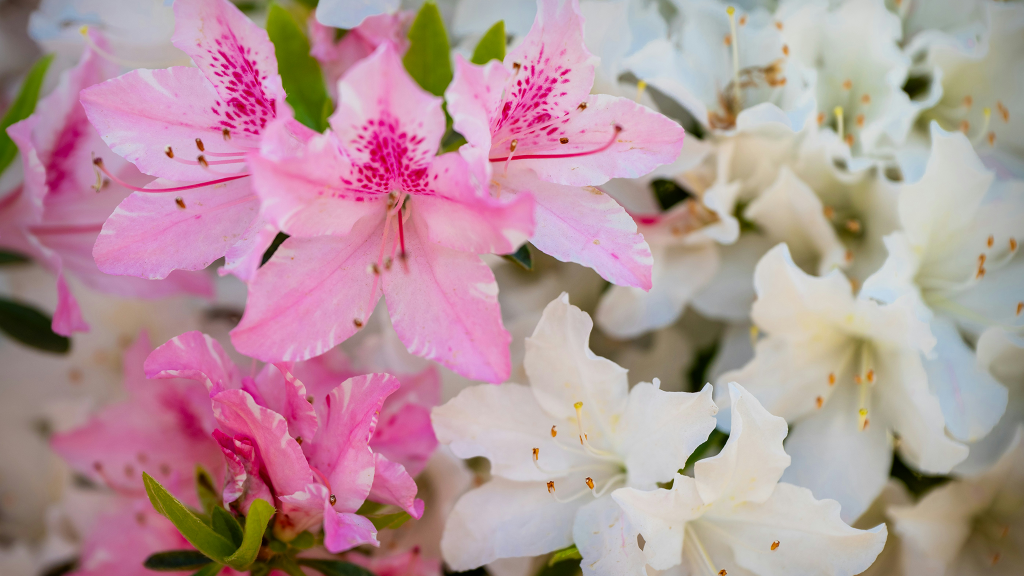
The True Start of Spring: Hino Crimson Azaleas
This episode opens with one of the classic spring markers: Hino Crimson azalea bloom time.
A favorite in older neighborhoods, this compact, deep red azalea is known for:
- rich crimson blooms
- dense flower coverage
- slow, steady growth
- exceptional long-term durability
Its recommended companion plant is Kurume Azalea Coral Bells, a soft pink bloom with a deeper pink throat.
Together, they create one of the best classic spring color combinations.
Mature Hino Crimson azaleas that reach 4 feet tall are often 40–50 years old, proving how durable they become once established.
The Four Essentials Every Plant Needs
A major theme of this episode is that every plant needs four basic things to thrive.
1. High-Quality Fertilizer
Use a slow-release fertilizer with:
- high first nitrogen number
- trace elements
- iron
- magnesium
This supports foliage growth, root development, and bloom performance.
2. Better Soil
Improving soil is critical, especially in heavy clay conditions.
The goal is to increase:
- organic matter
- air content
- root insulation
- water retention
Healthier soil means healthier roots through both summer heat and winter cold.
3. Hardwood Bark Mulch
Mulch is essential for plant survival.
Benefits include:
- moisture retention
- root insulation
- temperature control
- weed suppression
As the show emphasizes:
It’s not what water you get — it’s what water you keep.
4. Direct Hand Watering
New plants need far more water than sprinkler systems typically provide.
This is especially true during the first year.
Most sprinkler systems are designed for lawns, not shrubs and trees.
Direct watering at the root zone is strongly recommended.
Why Watering Technique Matters
This episode places strong emphasis on watering correctly.
Measure Water Output
All established vegetation in full sun needs approximately:
1 inch of water per week
Best way to measure:
- use a rain gauge
- place a tuna can in the sprinkler zone
- measure after one hour
Many systems need 8–10 hours to reach one inch.
New plantings often need more than double that amount.
Best Tool for Watering New Plants
The recommended solution is a watering wand.
Benefits:
- directs water below foliage
- reaches the root ball directly
- avoids runoff
- prevents the “umbrella effect”
Most plants can be watered effectively in 5–10 seconds each with this tool.
This makes it one of the best investments for spring planting success.
This Week’s Lawn & Garden Checklist
1. Kill Broadleaf Winter Weeds Now
Nearly all lawn weeds right now are broadleaf winter weeds.
Treat before they:
- die naturally
- leave bare spots
- drop massive seed loads
Recommended mix:
- 1.5 oz Weed Free Zone
- 1 oz Wilt-Pruf
- 1 gallon very warm water
Best time:
- early morning
- with morning dew
Special note: spray the lower foliage zone on hairy bittercress, not just the tall seed stems.
2. Apply Crabgrass Prevention Now
As April 15 approaches, now is the ideal time to apply Dimension.
Benefits:
- crabgrass prevention
- summer weed control
- safe for plant beds
- safe for hardscape cracks
This is one of the most important timing windows of the season.
3. Bag Lawn Clippings
Clippings do not break down effectively below 67°F.
Bagging helps:
- improve appearance
- reduce fungus risk
- prevent clumping
Especially important during spring’s heavy growth phase.
4. One Easy Lawn Solution
For simple lawn care, Greenview Triple Play is recommended.
It combines:
- 60% slow-release fertilizer
- Dimension
- broadleaf weed killer
This merges feeding, prevention, and control into one application.
5. Mow More Frequently Right Now
Spring growth is rapid.
Recommended mowing interval:
every 4–5 days
Important rule:
never mow below 3 inches
Frequent mowing improves turf density and overall lawn quality.
6. Still Time to Trim Shrubs
Still safe to prune:
- boxwood
- holly
- yew
- juniper
- arborvitae
Also summer bloomers:
- crape myrtle
- spirea
- burning bush
- butterfly bush
Since these bloom on new growth, heavier pruning can actually improve flowering.
7. Vegetable Garden Timing
Safe to plant now:
- cauliflower
- Brussels sprouts
- onions
- radish
Wait until Mother’s Day for:
- tomatoes
- peppers
Use hydrated lime and starter fertilizer at planting.
8. Pinch Mums for Fuller Growth
When new growth reaches ½–1 inch, pinch tips.
Do not shear.
Pinching encourages branching and fuller fall blooms.
9. Watch for Tent Caterpillars
Check cherry trees for nests in branch crotches.
Treat with Spinosad:
- very early morning
- late evening
This is when caterpillars are inside the nest.
10. Feed Spring Bulbs Now
If tulips, daffodils, crocus, or hyacinths are blooming, fertilize now.
This helps rebuild bulbs for next year’s blooms.
11. Buy a Rain Gauge
One of the best simple garden tools.
Knowing actual rainfall and irrigation output dramatically improves plant success.